
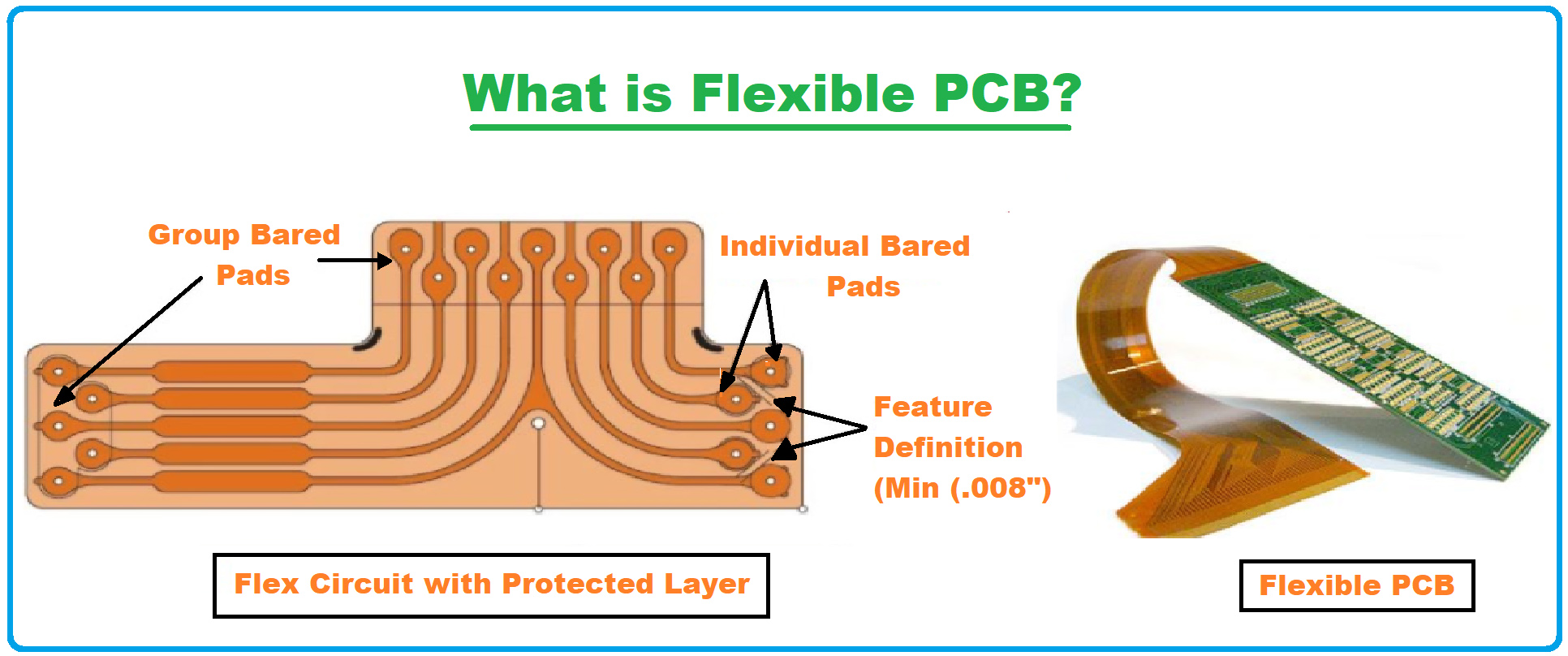
Flexible PCB technology, also known as FPC (Flexible Printed Circuit), is continuously growing, with applications in the main electronics sectors, such as consumer, automotive, electro-medical devices, wearables, telecommunications and aerospace. The introduction of flexible PCBs has revolutionized the legacy electrical interconnection techniques, traditionally used to connect multiple parts of the same circuit or of multiple electronic devices. Thanks to the flexible nature of the connection, its compactness, and the high density of electrical connections that can be achieved, the solution based on flexible PCBs allows to obtain a considerable reduction of space, weight and costs compared to an equivalent solution based on rigid PCBs. Flexible printed circuits have replaced many types of wiring, often done by hand, in several applications, reducing the total cost of electrical wiring by up to 70%. The heart of an FPC is represented by flexible films and thin layers of conductive material that make the electrical connection by replacing the traditional wires (think, for example, of the connection between a microcontroller board and an LCD or OLED display), and on which electronic components can be directly attached via soldering or conductive adhesive. Figure 1 shows an example of flexible printed circuit.